Course description

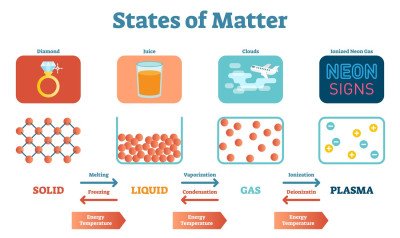
States of matter describe the distinct ways certain groups of particles arrange themselves with various temperatures and forces. Historically, these descriptions have focused on a material's shape and volume, giving us just three traditional states: solid, liquid, and gas.

দার্থের অবস্থাগুলি নির্দিষ্ট উপায়গুলিকে বর্ণনা করে যেভাবে কিছু নির্দিষ্ট কণা বিভিন্ন তাপমাত্রা এবং শক্তির সাথে নিজেদেরকে সাজায়। ঐতিহাসিকভাবে, এই বর্ণনাগুলি একটি উপাদানের আকৃতি এবং আয়তনের উপর দৃষ্টি নিবদ্ধ করেছে, যা আমাদেরকে শুধুমাত্র তিনটি ঐতিহ্যগত অবস্থা দেয়: কঠিন, তরল এবং গ্যাস।

What will i learn?

  • The state of matter affects a substance's properties. Examples of those properties include density, viscosity (how well it flows), malleability (how easy it is to bend), and conductivity. Changes between states of matter are often reversible.
  • পদার্থের অবস্থা পদার্থের বৈশিষ্ট্যকে প্রভাবিত করে। এই বৈশিষ্ট্যগুলির উদাহরণগুলির মধ্যে রয়েছে ঘনত্ব, সান্দ্রতা (এটি কতটা ভালভাবে প্রবাহিত হয়), নমনীয়তা (এটি বাঁকানো কতটা সহজ), এবং পরিবাহিতা। পদার্থের অবস্থার মধ্যে পরিবর্তন প্রায়ই বিপরীত হয়।

Requirements

  • In common temperatures and pressures, atoms form the three classical states of matter: solid, liquid and gas. Complex molecules can also form various mesophases such as liquid crystals, which are intermediate between the liquid and solid phases. At high temperatures or strong electromagnetic fields atoms become ionized, forming plasma.
  • সাধারণ তাপমাত্রা এবং চাপে, পরমাণু পদার্থের তিনটি শাস্ত্রীয় অবস্থা তৈরি করে: কঠিন, তরল এবং গ্যাস। জটিল অণুগুলিও বিভিন্ন মেসোফেস গঠন করতে পারে যেমন তরল স্ফটিক, যা তরল এবং কঠিন পর্যায়গুলির মধ্যে মধ্যবর্তী। উচ্চ তাপমাত্রায় বা শক্তিশালী ইলেক্ট্রোম্যাগনেটিক ফিল্ডে পরমাণু আয়নিত হয়ে প্লাজমা তৈরি করে।

Frequently asked question

The common thing among the three states of matter is-they consist of tiny, small particles. They have a specific mass and can take up space. There is a volume in these three states. In these three states ‘atoms have the strength of attractions between them. পদার্থের তিনটি অবস্থার মধ্যে সাধারণ জিনিস হল- তারা ক্ষুদ্র, ছোট কণা নিয়ে গঠিত। তাদের একটি নির্দিষ্ট ভর আছে এবং স্থান নিতে পারে। এই তিনটি রাজ্যে একটি আয়তন আছে। এই তিনটি অবস্থায় ‘পরমাণুর মধ্যে আকর্ষণের শক্তি আছে।

The mass of these three particles is less than a neutron’s mass, so each of them still gets some energy. So the same thing is really power and matter. Fully interchangeable. So in a way, all facets of the same thing are energy, matter, space and time. এই তিনটি কণার ভর একটি নিউট্রনের ভরের চেয়ে কম, তাই তাদের প্রতিটি এখনও কিছু শক্তি পায়। তাই একই জিনিস সত্যিই ক্ষমতা এবং বস্তু. সম্পূর্ণরূপে বিনিময়যোগ্য. সুতরাং একটি উপায়ে, একই জিনিসের সমস্ত দিক হল শক্তি, পদার্থ, স্থান এবং সময়।

In addition, the first law of thermodynamics does not state that matter can not be created or destroyed, but rather that the total amount of energy in a closed system can not be created or destroyed, although it can be modified from one form to another. উপরন্তু, তাপগতিবিদ্যার প্রথম সূত্রটি বলে না যে পদার্থ তৈরি বা ধ্বংস করা যাবে না, বরং একটি বদ্ধ সিস্টেমে মোট শক্তির পরিমাণ তৈরি বা ধ্বংস করা যাবে না, যদিও এটি এক ফর্ম থেকে অন্য ফর্মে পরিবর্তন করা যেতে পারে।

₹299

Lectures

4

Quizzes

2

Skill level

Beginner

Expiry period

Lifetime

Certificate

Yes

Share this course

Related courses